Nowadays, the industries are experiencing a paradigm shift in which speed, flexibility and efficiency aren’t optional, but essential. The outdated infrastructure, which was expensive and difficult to upgrade and adapt to the need for real-time analytics and distributed operations. ScalerPi offers a new perspective on edge computing by combining it with practical engineering in order to deliver solutions that can be extremely adaptable.
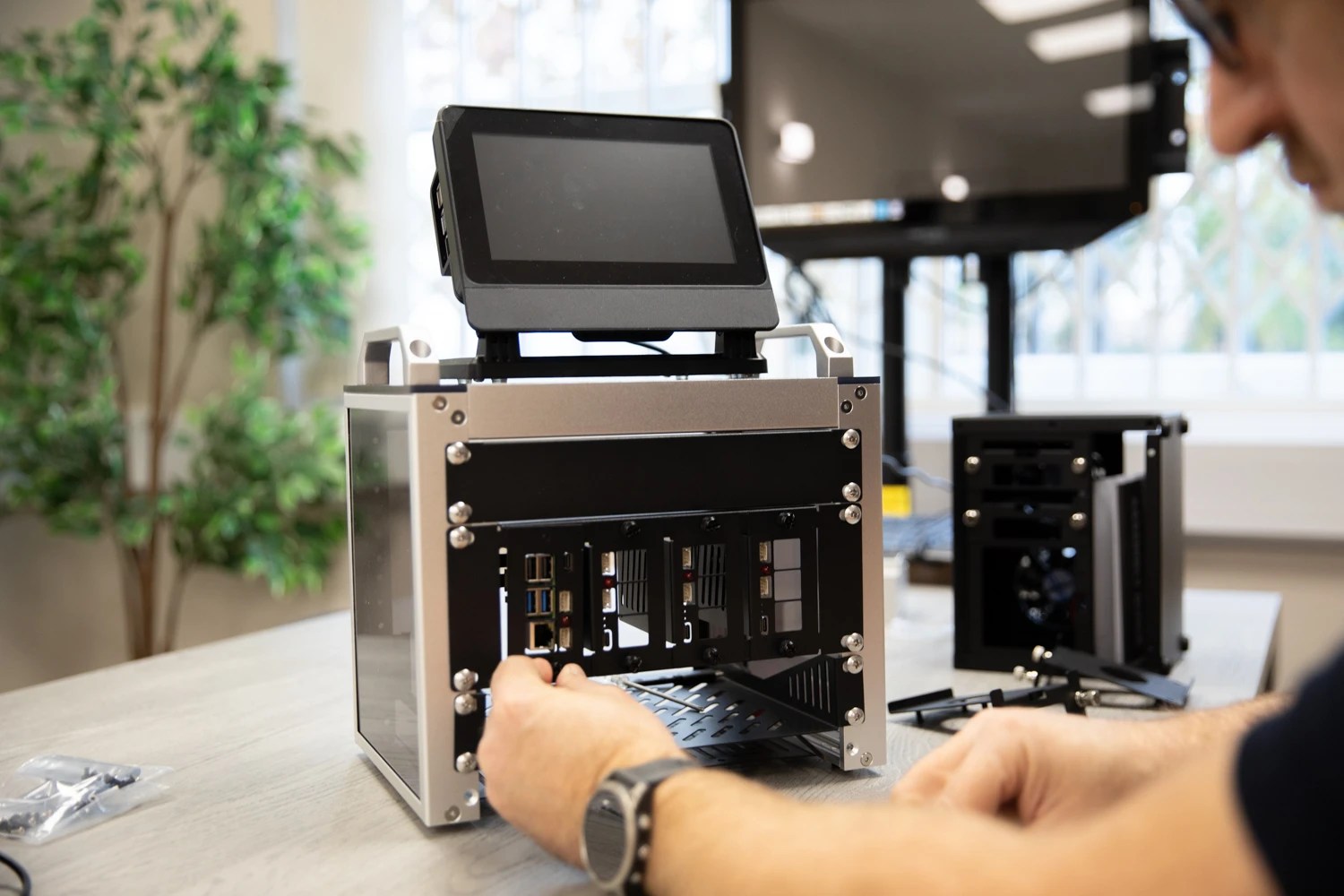
At the heart of this evolution is industrial automation, using Raspberry Pi, which enables organizations to rethink how they create and manage their systems. Businesses can put powerful and lightweight devices directly at the source of data instead of relying on large, centralized hardware. This approach not only decreases the amount of latency, but lets teams react quickly to the changing environment.
Data to Action at the Edge
The real advantage of edge computing lies in the ability to handle data locally. Waiting for cloud-based solutions to react in a wide range of industrial environments isn’t practical. ScalerPi can provide an infrastructure that is not dependent, but can still integrate with other systems if needed.
An important part of this system is the industrial Raspberry Pi IoT gateway, which acts as the central connecting point between devices and applications. It facilitates seamless communication between sensors, software and machine platforms. It’s possible to track the operations in real-time, detect issues quickly and maintain a consistent flow across many sites.
This capability can have a profound impact on sectors such as logistics and environmental monitoring. Systems can operate even in low-connectivity or remote areas, assuring that the operation continues unaffected and that data is accessible.
Compact Power for Demanding Environments
In the field of industrial computing, balancing speed and practicality is one of the toughest tasks. While big servers are a great source of power, they can be costly, consume lots of energy and offer limited range of flexibility. ScalerPi overcomes this with industrial Raspberry Pi servers that deliver reliable computing in a compact, energy-efficient form.
These servers are built for environments in which space and power are at a minimum. They can be utilized in a manufacturing facility or retail outlet, and also as a remote monitoring station. Their modularity allows for gradual expansion, making it possible for businesses to match growth with the needs of the moment.
The compact industrial Raspberry Pi server module offers more flexibility. It was designed for extreme conditions the servers are built to last and combine toughness and advanced processing capabilities. They are suitable for applications that require continuous operation, for instance smart city systems or industrial automation installations.
Containerized deployment provides flexibility
Modern infrastructures must be able to adapt and that is why containerization plays an essential function. ScalerPi integrates Raspberry Pi docker to provide the flexibility and efficiency of managing applications. Docker allows businesses to deploy to scale, update, and deploy applications without interrupting their ongoing operation.
This approach simplifies development and ensures consistency across different deployments. The application can be tested and then seamlessly transferred to a different environment, decreasing errors and improving reliability. This kind of control can be extremely valuable for businesses who manage multiple sites.
Containerization also facilitates innovation. Teams can experiment with new features or services without impacting existing systems, helping them keep up with the competition in industries.
Practical Solutions to Multiple Sectors
ScalerPi’s greatest strength is its adaptability to different industries. Industrial automation made possible by Raspberry Pi is a great way to boost productivity and cut production time. The machines can transmit and share data to create a connected and intelligent working environment.
Edge solutions in agriculture aid in more efficient farming. Sensors monitor the health of crops and soil conditions. They also track weather patterns.
Retail and hospitality will benefit from the analysis of customer behavior in real-time. Companies can enhance the experience of their customers by enhancing their operations. This can include digital signage as well as queue management. While public sector initiatives which include smart cities rely on edge infrastructure for tasks like monitoring environmental quality and asset tracking.
Bridging Hardware and Cloud without a doubt
The ability of ScalerPi to bridge physical devices and cloud-based systems is the reason it stands out. It creates a single platform that combines hardware expertise with modern cloud practices.
This approach allows businesses to expand without hassle. No matter if you are beginning with a small number of devices or expanding to thousands of devices your infrastructure will remain in control, safe, and affordable. The transparent pricing system and modular designs help to simplify the process. The focus of organizations can be on innovation and not operational challenges.
Industrial Technology: A Future-Ready Approach
The need for a scalable and flexible infrastructure will only increase as industries change. ScalerPi can be a solution which fulfills these requirements through combining edge computing power along with Raspberry Pi technology.
From the industrial Raspberry Pi servers to advanced IoT gateways, and containerized applications Each component is developed with scalability and real-world usability in the back of our minds. The system is built to not just accommodate the current requirements, but also make sure that businesses are prepared for the future.